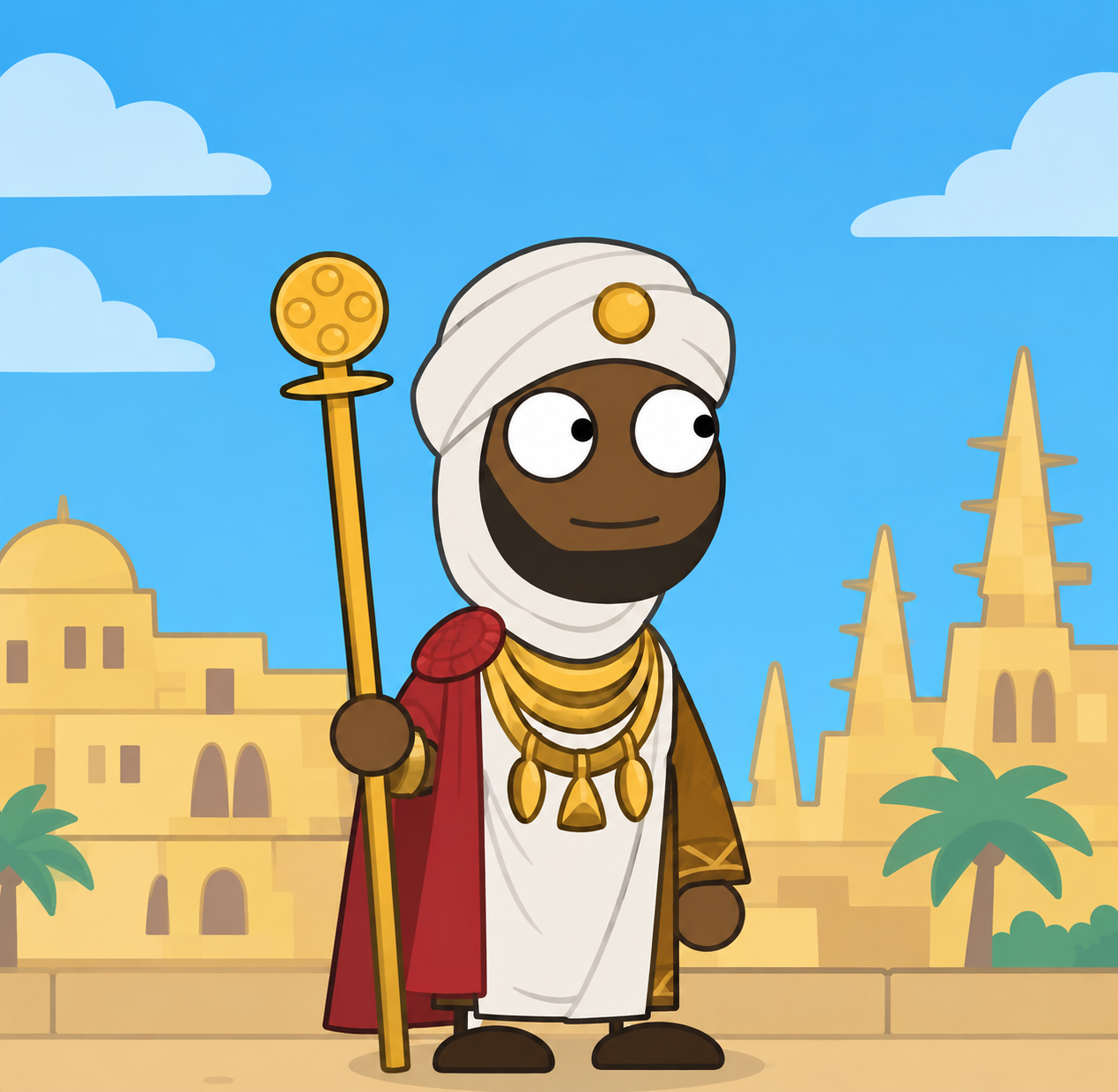
Who was Mansa Musa?
He came through Faith. The world saw Gold.
The real story behind the meme — clear on a first read, full enough to honor the history.
Emperor of a golden empire
Mansa Musa ruled the Mali Empire in the early fourteenth century — one of the largest and richest states of the medieval world. “Mansa” meant emperor. His realm stretched across West Africa, fed by gold mines, salt routes, and caravans that tied the Sahara to markets far beyond.
He was also a devout Muslim. Faith was not a costume for court. It shaped how he governed, traveled, and spent.
The hajj that rewrote Cairo
In 1324 he set out on hajj to Mecca with a caravan so vast chroniclers could barely count it — thousands of people, camels loaded with gold, a moving court crossing the desert.
Passing through Cairo, he gave with open hands: gifts, charity, gold spent until markets flooded and prices fell for years. He came through faith. The world saw gold. Egypt’s economy remembered the visit long after the caravan was gone.
Mosques, scholars, Timbuktu
Back in Mali he poured wealth into more than spectacle. He commissioned mosques and schools. Scholars gathered. Manuscripts traveled the same routes as gold.
Timbuktu rose as a center of learning. Faith built the walls. Knowledge filled them. That was the empire’s other treasure — the one that outlasted any single pilgrimage.
Why $MANSA remembers
$MANSA is a meme with a memory. The punchline only works because the history is real: devotion moved an empire, and the markets never forgot who walked through.
Faith in the trenches first. Holders see gold second. Hold the faith. Gold remembers who stayed.